
Perennial groundcovers do more for the garden than you might realize. These beautiful plants can actually act as a replacement for mulch in the landscape. They accomplish many of the same key things like suppressing weeds, keeping areas tidy, and supporting wildlife, all while beautifying your landscape. With so many to choose from, which one is best for your space? We’ve compiled a list of the top groundcovers we grow and sell at Petitti Garden Centers—including the benefits of growing each!
The Garden's Unsung Hero
Perennial Groundcovers
Creeping Speedwell
Veronica
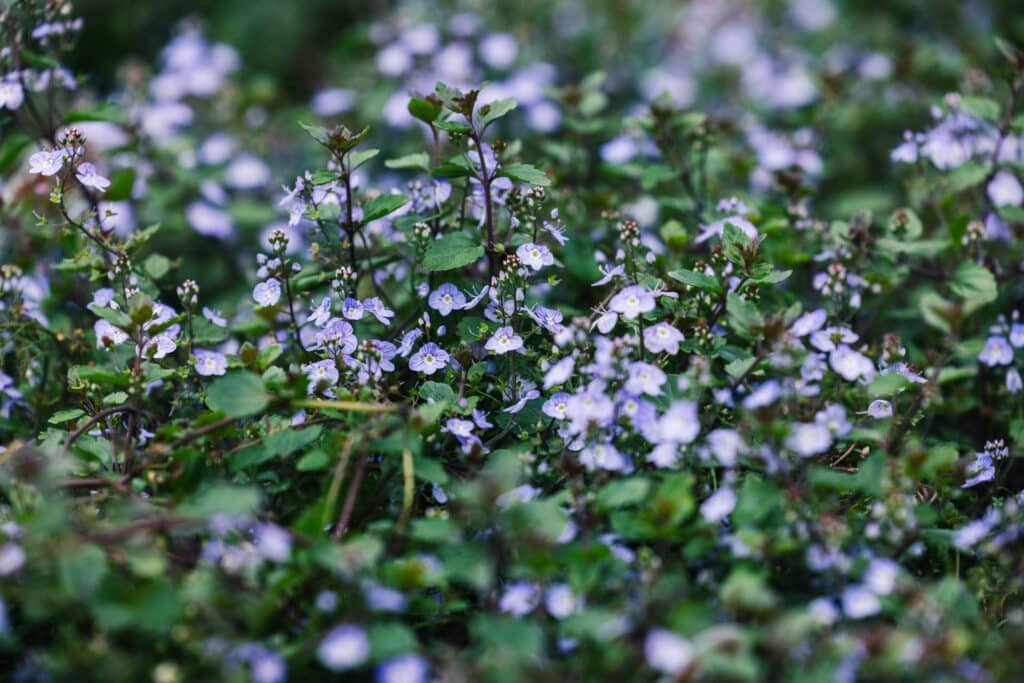
Creeping Speedwell (Veronica) is a versatile, deer-resistant groundcover for full sun to part shade. It forms dense, low-growing foliage that produces tiny white, light blue, or dark blue flowers in early spring, adding a delicate pop of color while most perennials are just starting to emerge. Veronica is a fairly tough plant, making it an excellent choice for planting between stepping stones in light-traffic areas. Creeping varieties grow around 2–4″ tall and spread 12–18″ wide and perform best in well-drained soil.
Full Sun to Part Shade | 4-6 hours of direct sun per day
Deadnettle
Lamium
Spotted Deadnettle (Lamium) is a fantastic shade-loving perennial groundcover. Its delicate, mottled foliage has a slight fuzziness, making it a great deer and rabbit resistant option. In spring, Lamium produces gorgeous pink, white, or purple blooms that attract pollinators to the shade garden. While it can tolerate some full sun, edges of the foliage may turn brown and crispy when exposed to direct sunlight for too long, making it a great option to plant underneath trees in dry shade areas. Although it does spread, Lamium is not aggressive and typically grows about 10″ tall when in full bloom, spreading about 12–18″.
Part Shade to Shade | 6 hours or less of direct sun per day
Bugleweed
Ajuga
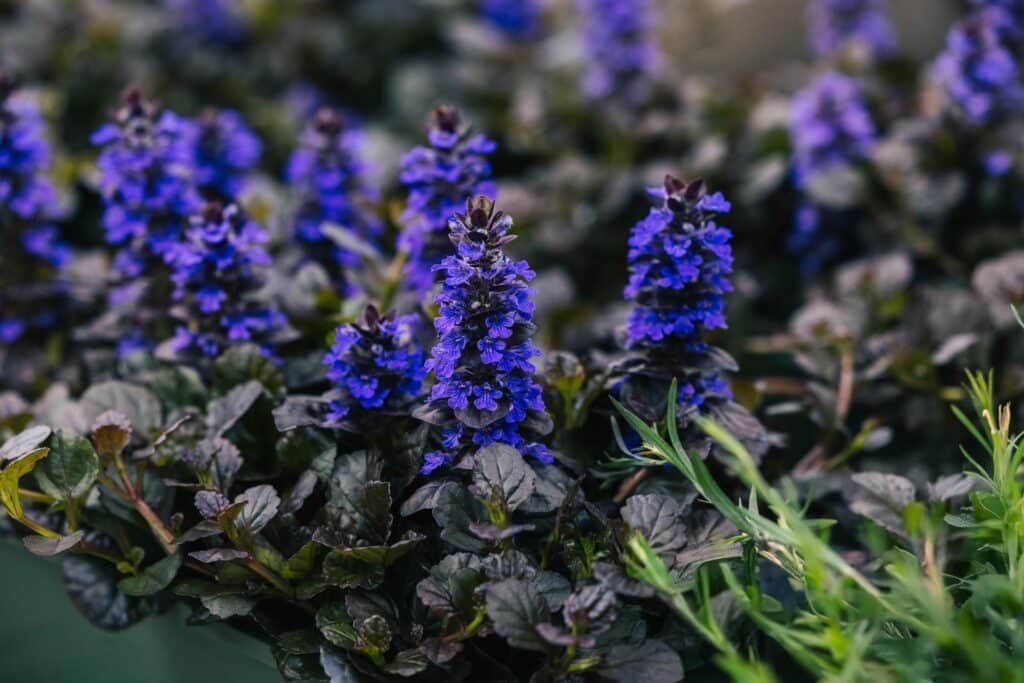
Bugleweed (Ajuga) is known for its striking foliage. In spring, it sends up short spikes of purple-blue flowers that add bold color and texture to the garden. Similar to strawberries, Ajuga spreads by sending out stolons—above-ground runners that produce small rooted clumps as they grow. This hardy groundcover is incredibly versatile, growing well in full sun to full shade areas, reaching 8–10″ tall when in bloom. One thing to keep in mind is its aggressive nature. While not uncontrollable, it will spread when it’s happy. To keep it contained, simply remove new stolons or rooted offshoots as needed.
Full Sun to Full Shade
Blue Star Creeper
Isotoma
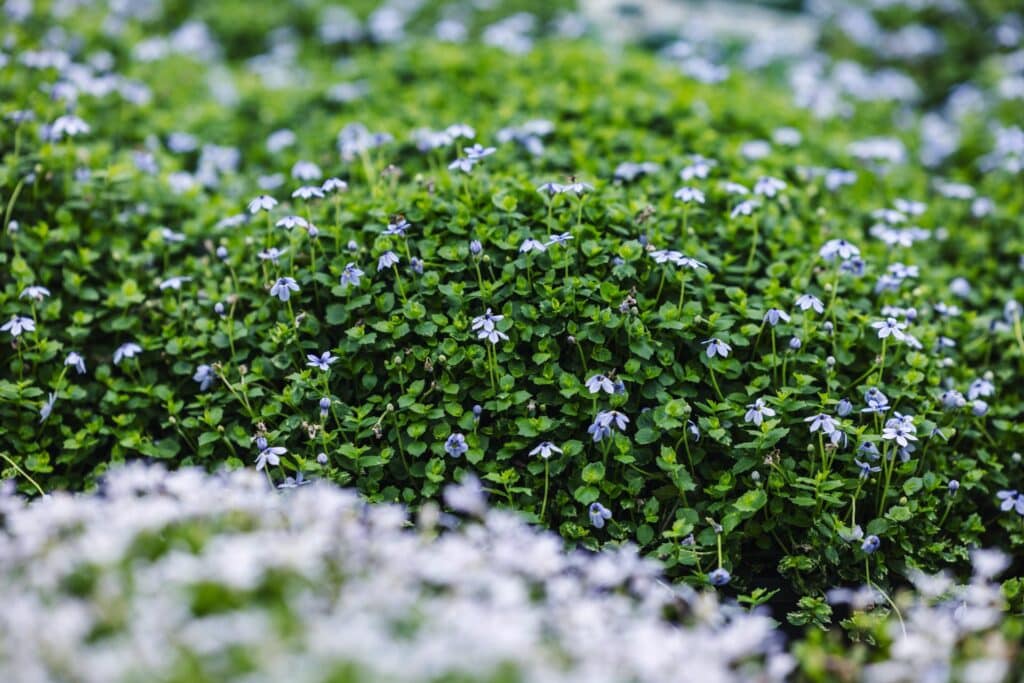
Blue Star Creeper (Isotoma or Laurentia) is a very low-growing, cushy groundcover that makes an excellent filler between stepping stones or along garden paths. It produces tiny white to blue, star-shaped flowers in cycles throughout the season, adding subtle charm without overwhelming surrounding plants. Unlike more aggressive spreaders, Blue Star Creeper grows at a manageable pace, making it an ideal choice for a tidy edge or border in well-drained areas of the landscape. It stays 2–4″ tall and spreads 12–24″ wide.
Full Sun to Part Shade | 4-6 hours of direct sun per day
Sweet William
Dianthus
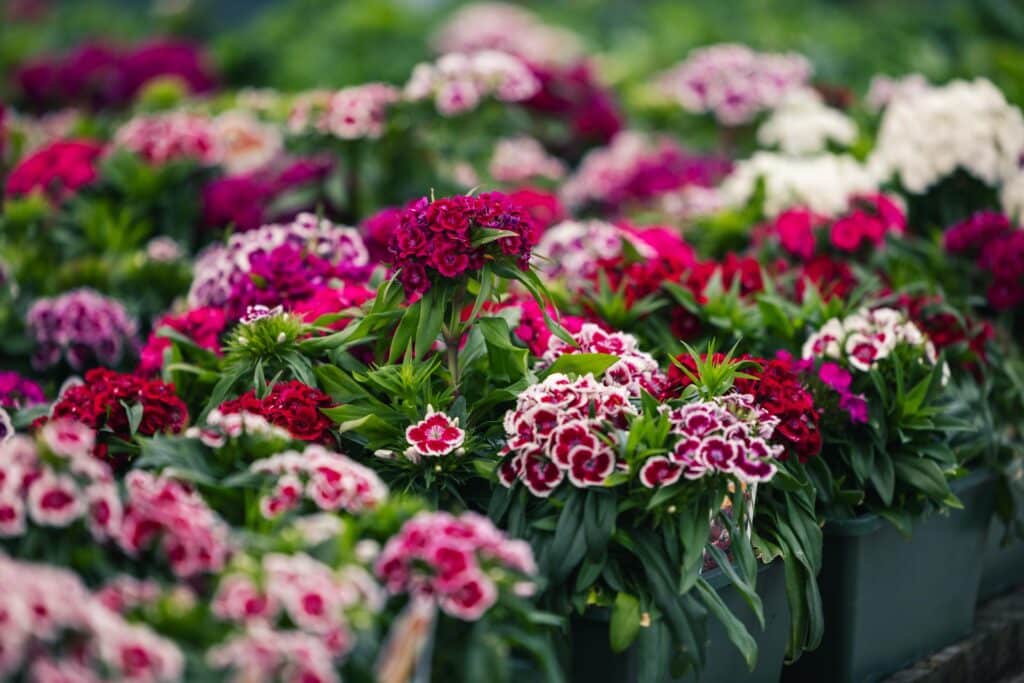
Sweet William (Dianthus barbatus) is a spring-blooming biennial, meaning it grows for two years, then returns from its own seed the third year and so on. That said, it’s a prolific reseeder, so it’s often hard to tell when it dies back—new plants keep the blooms coming! This beautiful plant has a tidy, mounding habit that makes it an excellent border plant in sunny spaces. It blooms reliably in early spring and reaches about 12″ tall and wide when in flower. Sweet William also makes a lovely cut flower and offers a light, sweet fragrance when in bloom.
Full Sun to Part Shade | 4-6 hours of direct sun per day
Perennial Creeping
Thyme
There are several types of perennial, creeping thyme available—all of which make fantastic, low-mounding groundcovers. Their tight, tidy growth habit makes them perfect for areas with foot traffic, like stone paths. They are also fragrant, which makes this plant family a great deer-resistant option. ‘Wooly’ Thyme has a light fragrance, fuzzy foliage, and a smaller flower than most. ‘Mother of Thyme’ offers a wonderful fragrance and produces pretty hot pink to violet flowers every 4-6 weeks. ‘Elfin’ grows less than an inch tall, with dense foliage, a subtle aroma, and delicate lavender flowers. Most creeping thymes grow about 1–3″ tall and spread 12–24″ wide.
Full Sun | 6+ hours of direct sun per day
phlox subulata
Creeping Phlox
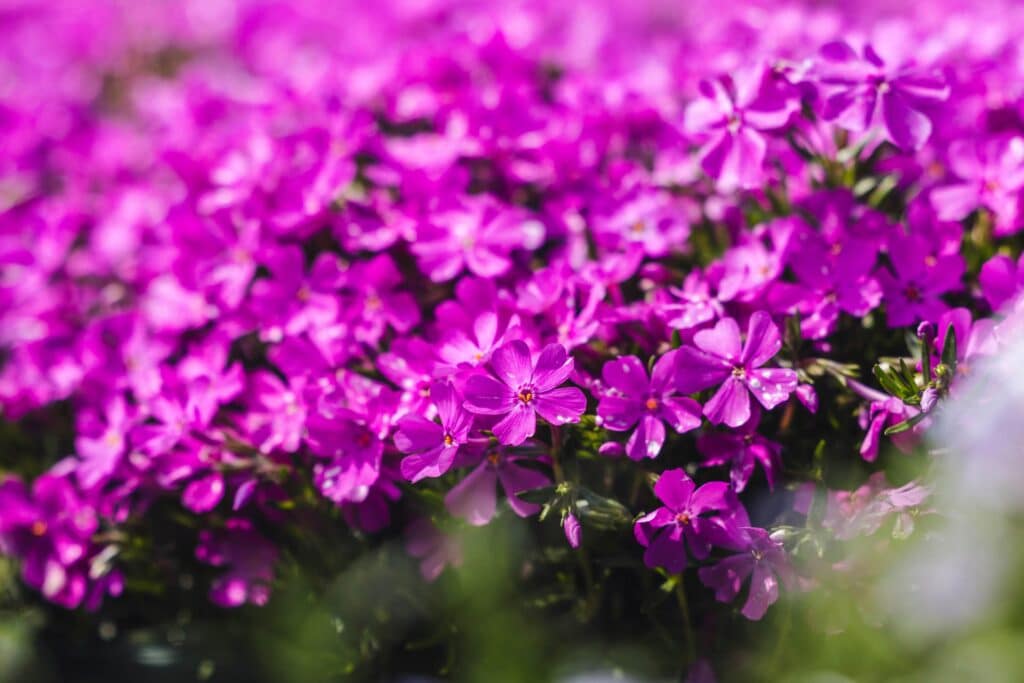
Creeping Phlox (Phlox subulata) is one of the most popular perennial groundcovers we grow. These beautiful Ohio native plants produce dense mounds of vibrant blooms each spring, with colors ranging from pink and blue to purple, white, and even striped varieties. It thrives in full sun and tolerates most soil conditions, making it a reliable choice for brightening your landscape. Creeping phlox typically grows 4–6″ tall and spreads 12–24″ wide.
Full Sun | 6+ hours of direct sun per day
Showy Stonecrop
Perennial Sedum
Stonecrop (perennial Sedum) is a sun-loving groundcover that provides incredible color and texture to well-drained areas of the landscape. It thrives in tough spots—like sunny slopes, rock gardens, or by the mailbox—where other plants might struggle. Stonecrop features unique, often colorful succulent-like foliage, and produces vibrant flower clusters that attract pollinators from late summer through fall. While it does spread steadily, it’s not aggressive, making it easy to maintain. Just be sure to plant in full sun and avoid areas that collect water—Sedum don’t like wet feet!
Full Sun | 6+ hours of direct sun per day
Ice Plant
Delosperma
Ice Plant (Delosperma) is a sun-loving, drought-tolerant groundcover that thrives in hot, dry conditions—think well-draining slopes, rock gardens, or the sunniest edges of landscape beds. This hardy succulent features vibrant, daisy-like flowers that open fully in the sun and close at night. Delosperma bloom reliably all season long, making them an excellent choice for adding color and texture to tough spots. Just be sure to avoid areas that collect water—they don’t like wet feet. Ice Plants typically grow 2-4″ tall and 12-24″ wide.
Full Sun | 6+ hours of direct sun per day
Brass Buttons
Cotula
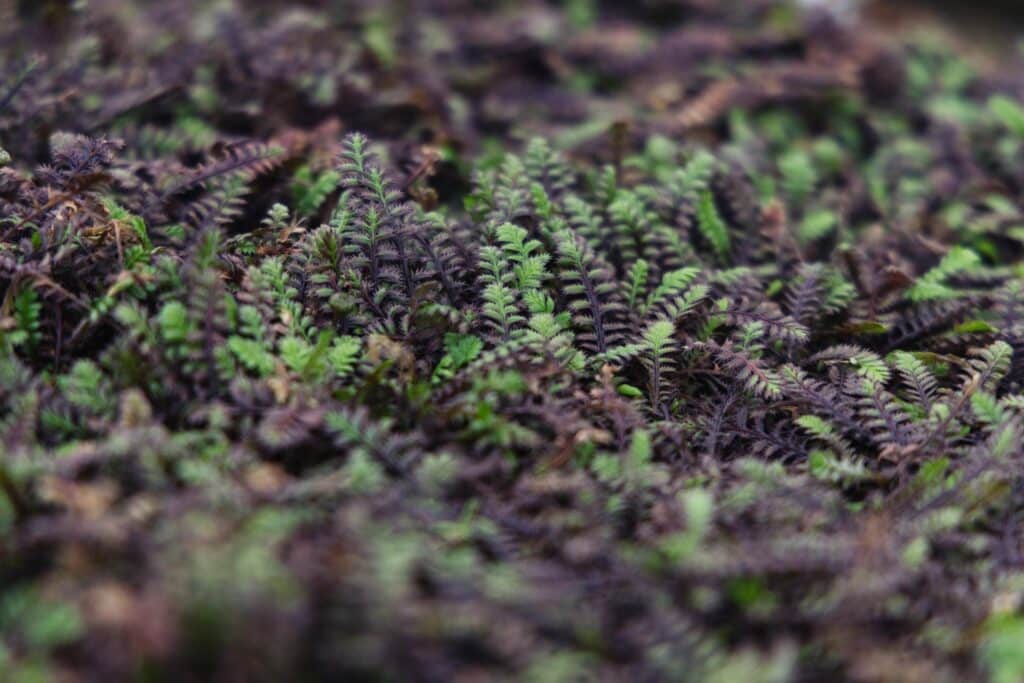
Commonly referred to as Cotula or Brass Buttons, Leptinella squalida is a unique, perennial groundcover with soft, fern-like foliage. It stays short and compact, making it a great option for planting between stepping stones, or using as a lawn substitute. While it’s primarily grown for its mossy green to deep bronze coloration and lovely texture, it also produces tiny yellow, button-like, flowers in summer. This deer resistant option stays 1-3″ tall and spreads 8-12″ wide.
Full Sun to Part Shade | 4-6 hours of direct sun per day



a video guide to
perennial groundcovers
Looking for something beyond the usual Ivy or Vinca? In this video, Noelle takes a deep dive into under-the-radar perennial groundcovers—sharing care tips, planting suggestions, and insight into how these unsung heroes can transform your garden from the ground up. Perennial groundcovers do so much for the landscape, including suppressing weeds, supporting wildlife, and keeping the soil cool. From sun-loving sedum to shade-tolerant Lamium, Noelle highlights 15 options you may not know about.
gardening with
perennial groundcovers
Groundcovers do a lot of heavy lifting in the landscape—from maintaining moisture and suppressing weeds to feeding pollinators and adding low-growing interest. Whether you’re dealing with sun, shade, slopes, or high-traffic areas, there’s sure to be a perfect groundcover to use.