
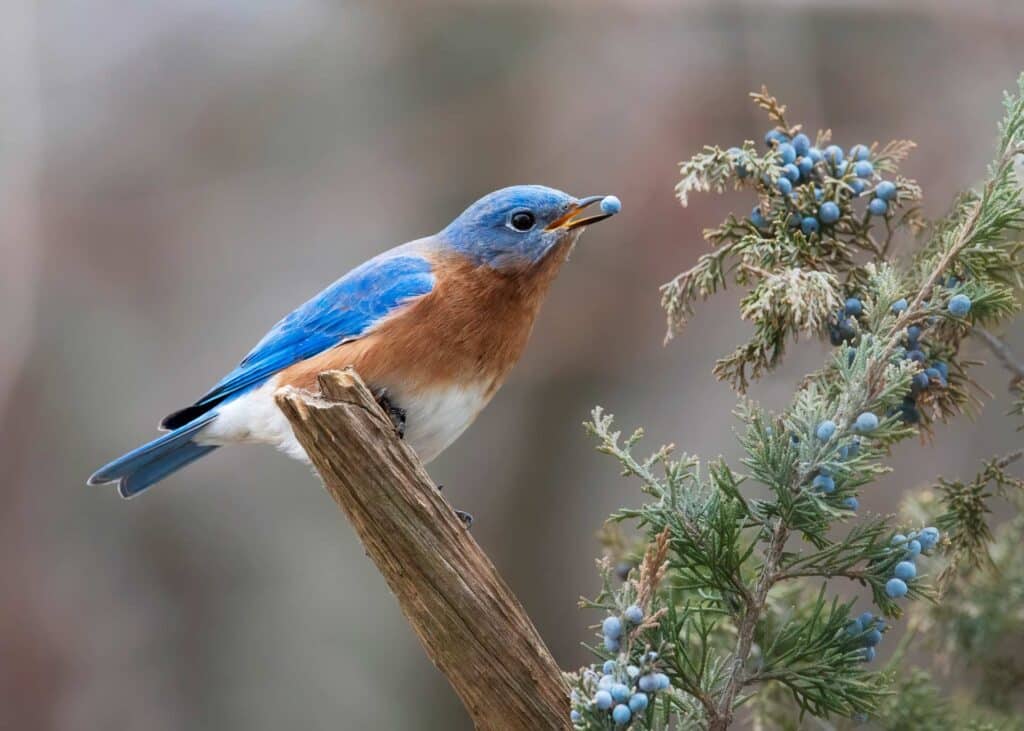
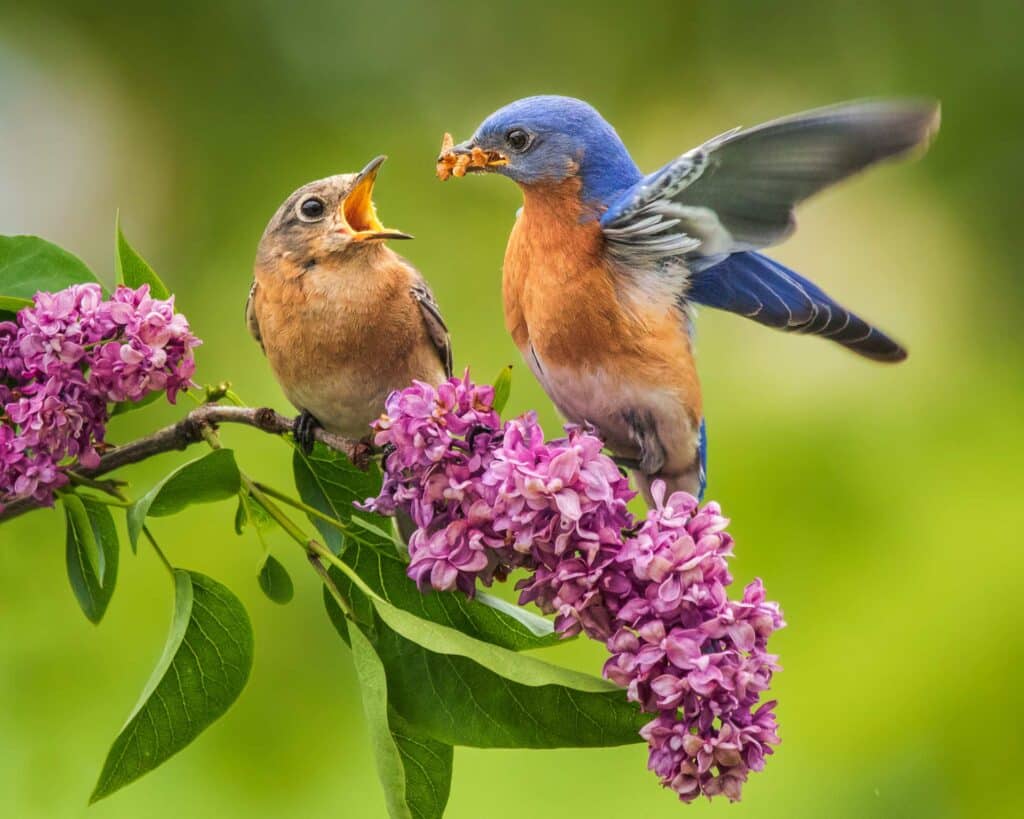
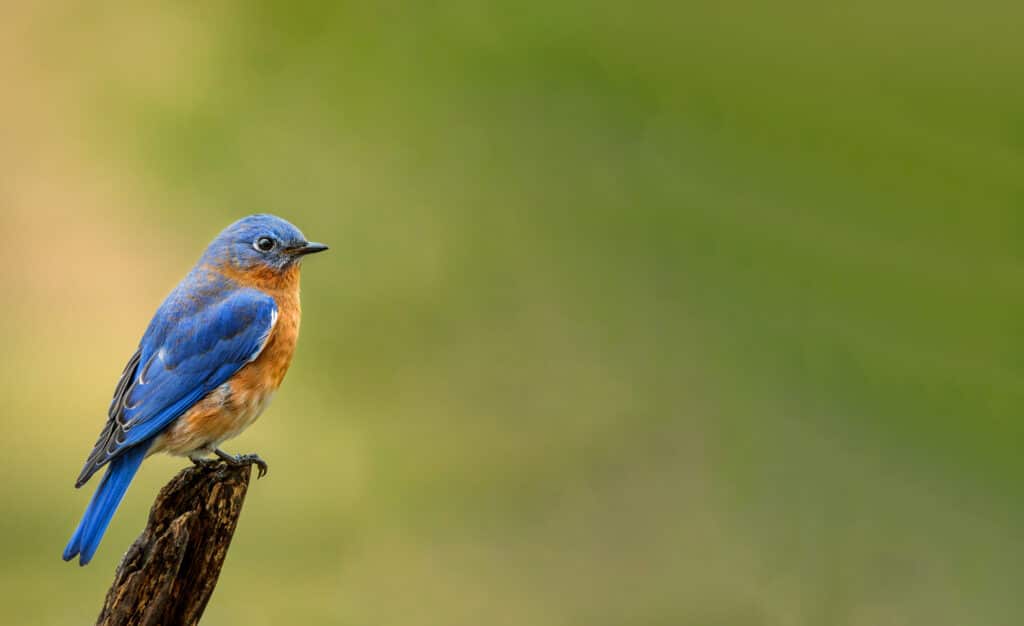
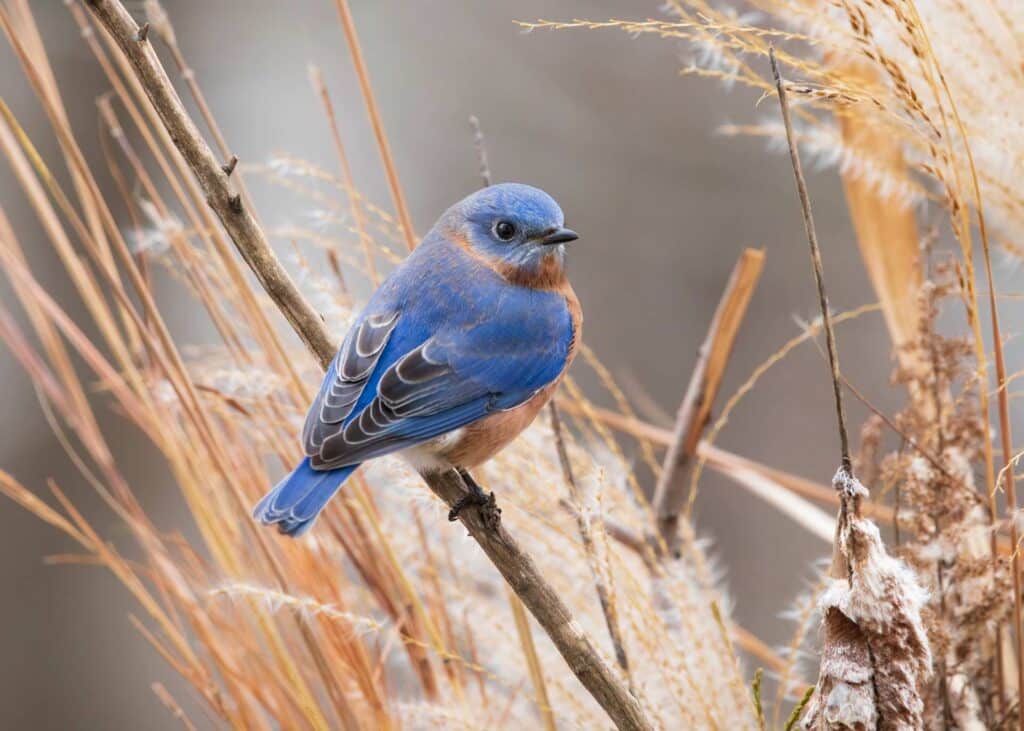
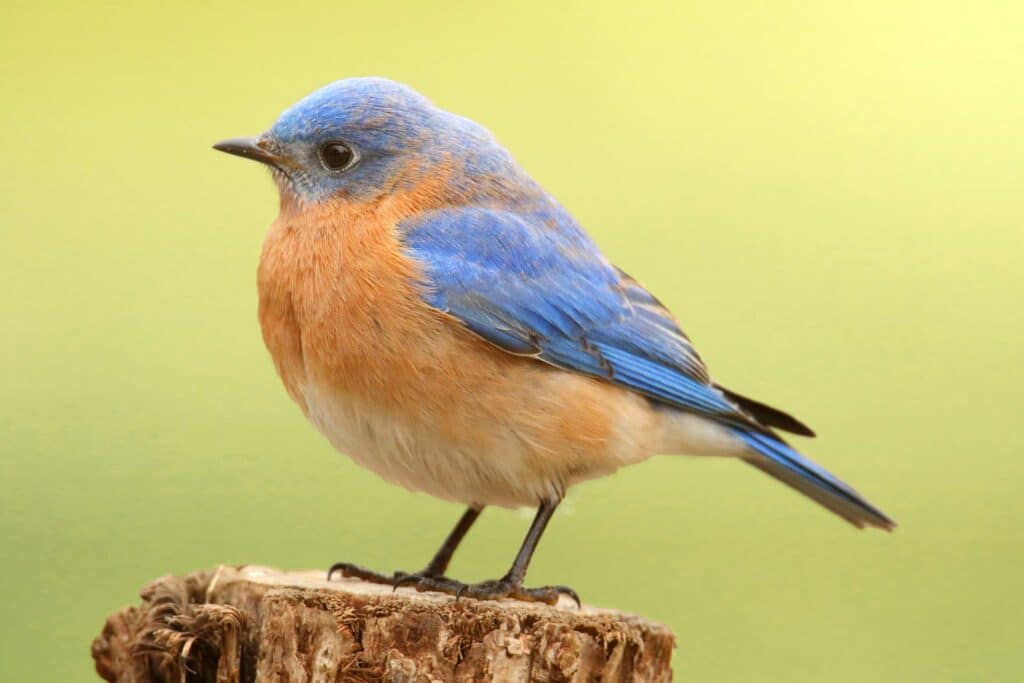
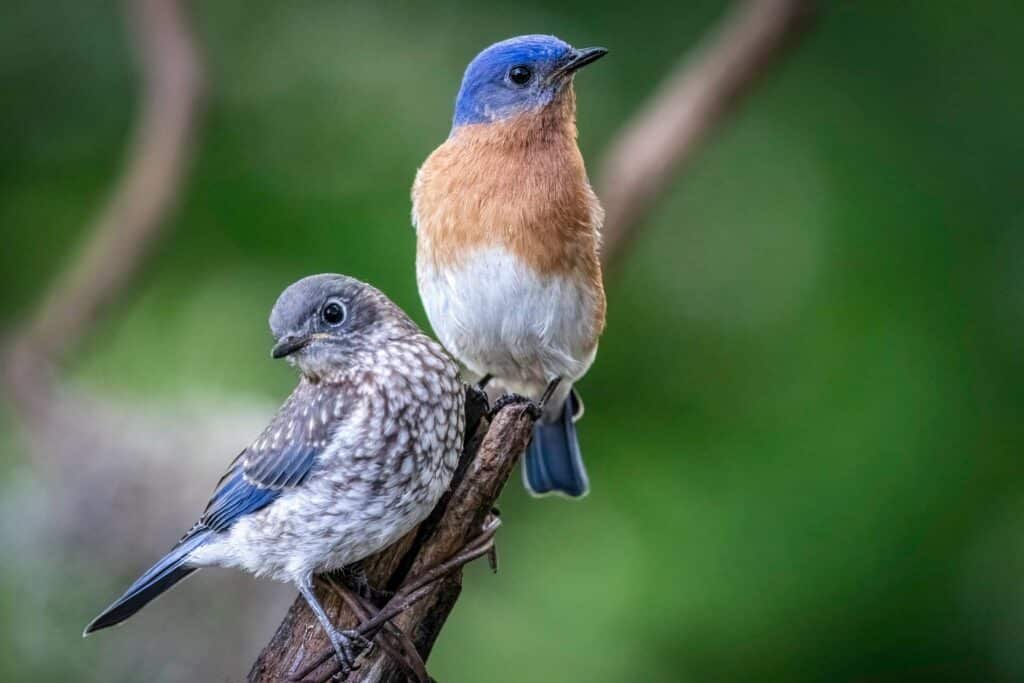
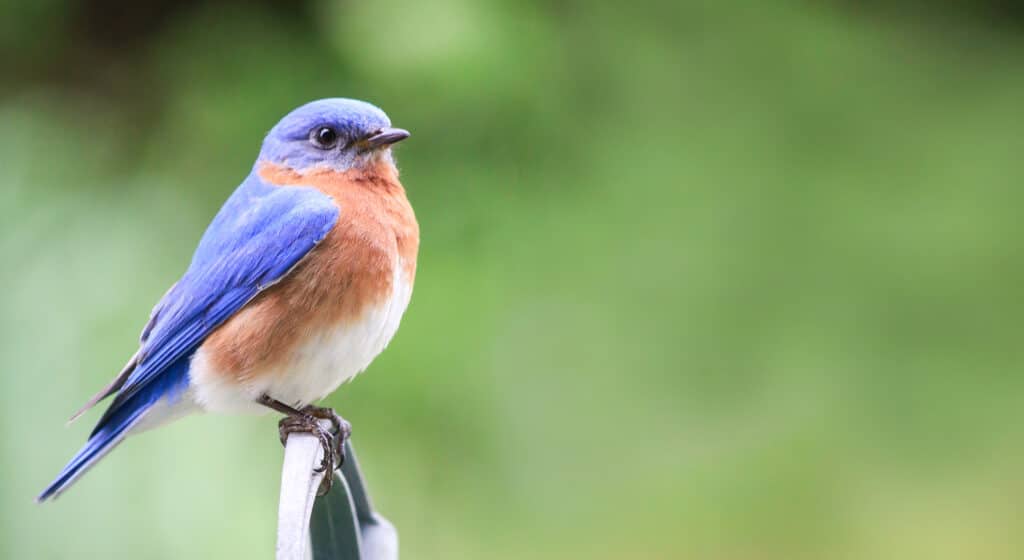
If you’ve ever heard the species referred to as Blue Robin or Blue Redbreast, it’s probably because the Eastern Bluebird – like the American Robin – is a thrush. Though smaller than a robin, cousin bluebird shares thrush features: rounded head, big eyes, plump belly, and an alert posture. Both hatch from bluish eggs, feed on insects in summer, and rely heavily on berries in the winter. However, bluebirds’ colors are strikingly different. Male bluebirds display the telltale, bold blue head and back with a rusty orange throat and chest. Females are more subdued in their looks, featuring a grey-brown appearance overall, but still sporting blue tinges on the wings and tail.
sialia sialis
(scientific name)
things are looking up
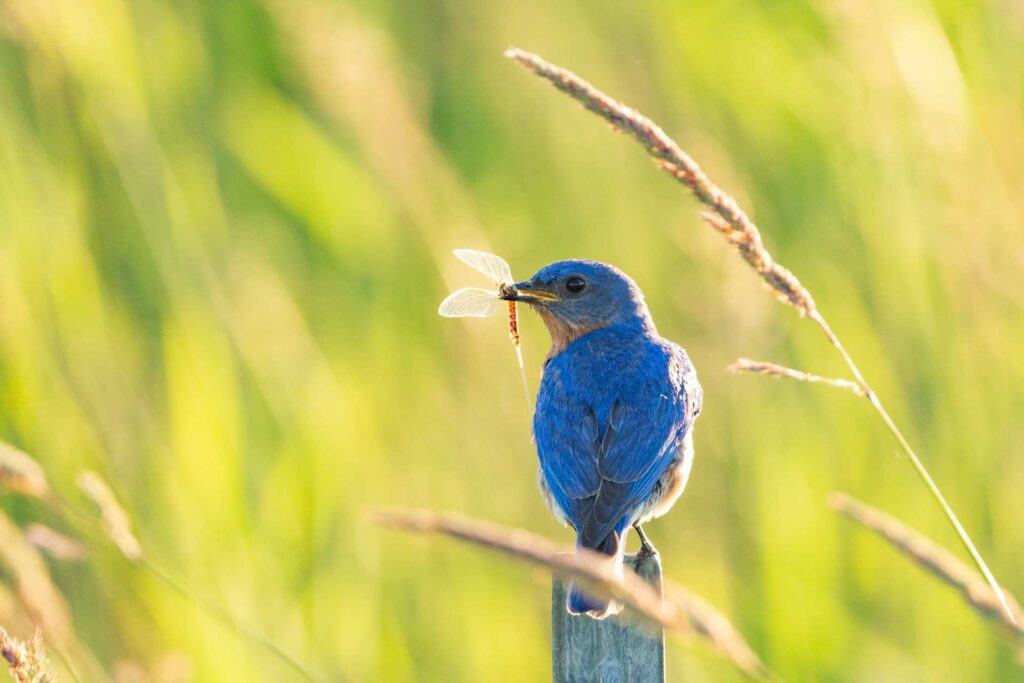
These days, bluebirds are most often spotted atop telephone wires, power lines, and high fence posts. They’re always scanning the ground for prey, which they can see from a good 60 feet away. When they catch sight of a meal, which can include caterpillars, beetles, crickets, grasshoppers, and spiders, they flutter down to the ground or snatch the creatures in mid-air, then return to their perch.
attracting to your home
backyard bluebirds
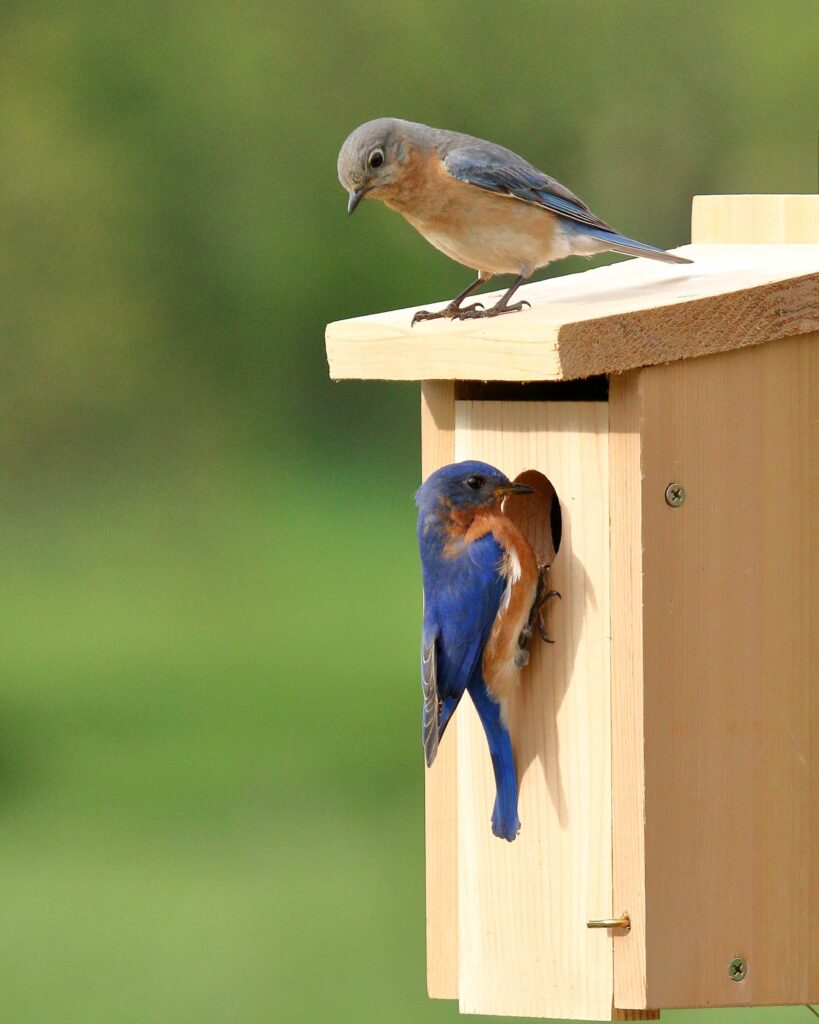
Homeowners with a spacious yard may want to place a nesting box to help with strengthening the bluebird population. The ideal stretch of yard space is approximately one half acre in size, fairly open, and free of dense vegetation. Nesting boxes should be specially designed to support the ideal breeding conditions for bluebirds while mitigating the biggest threats to their survival.
food for thought
preferred food sources
Bluebirds are naturally foragers, but they can certainly be trained to visit feeders – especially if you serve up their favorite, mealworms! Like nesting boxes, feeders should be specially designed to cater to bluebirds while discouraging competition.
The Cedar Bluebird Feeder by Songbird Essentials features a 9/16-inch hole perfectly sized to give bluebirds the advantage in accessing mealworms. The roof protects the food from sun and rain, and also pivots for easy filling.
Bugs for Birds™ by Wild Delight is a protein-rich, three-insect mix combining black soldier fly larvae, dried darkling beetles, and dried mealworms to attract bluebirds.
Mealworms are irresistible to bluebirds, and dried mealworms are readily available year-round at Petitti’s. For best results, soak in hot water for fifteen minutes to soften before adding to the feeder.
Lend a Helping Hand
With unrelenting competition from sparrows and starlings for nesting cavities, and the shift of Ohio’s farmland from a mix of small, diverse crop fields to large, monoculture corn and soybean farms, the Eastern Bluebird will continue to be challenged and will certainly benefit from helpful human hands!
The Basics of Backyard Birding