
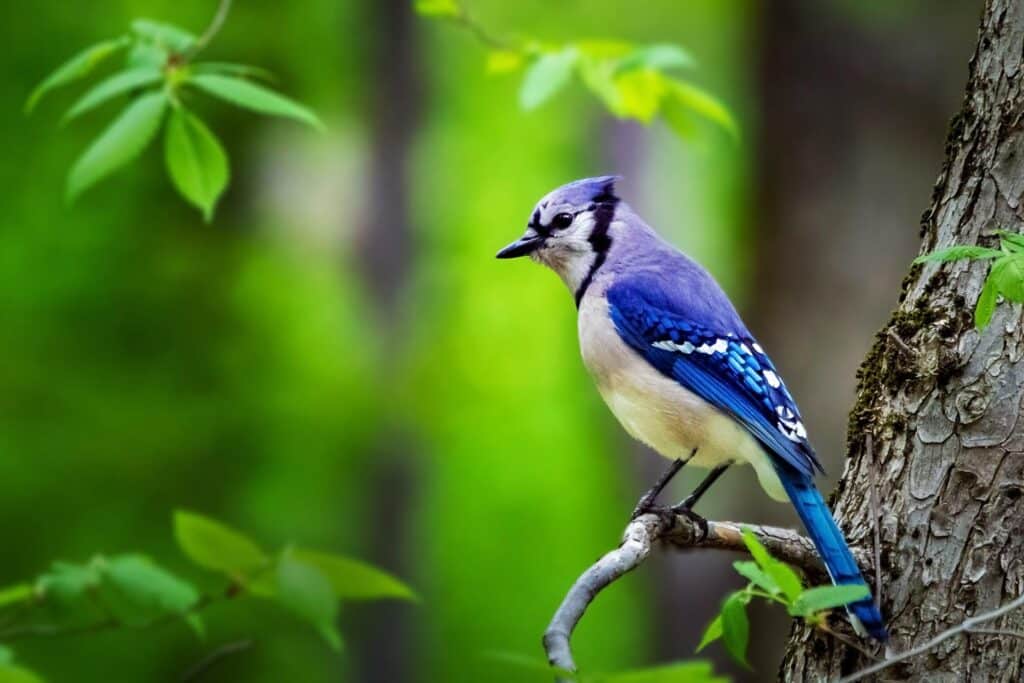
If there’s one bird that refuses to go unnoticed, it’s the blue jay (Cyanocitta cristata). Common across Northeast Ohio, especially in suburban yards, these flashy birds sport vibrant blue, black, and white plumage with a signature crest that gives them a regal, if not mischievous, appearance. Their name comes from the Greek Cyanocitta cristata, meaning “bright blue bird with a crest.” But it’s not just their looks that make them stand out—their loud squawk often drowns out every other backyard songbird.
Blue Jays
backyard bullies or garden guardians?
Favorite Food: Peanuts in the shell
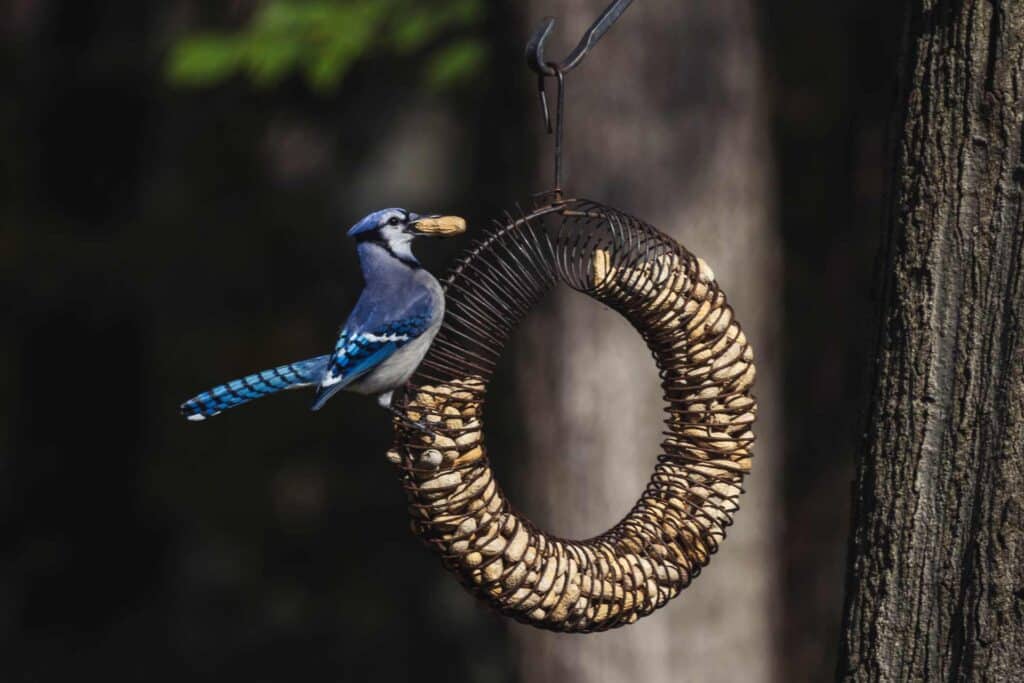
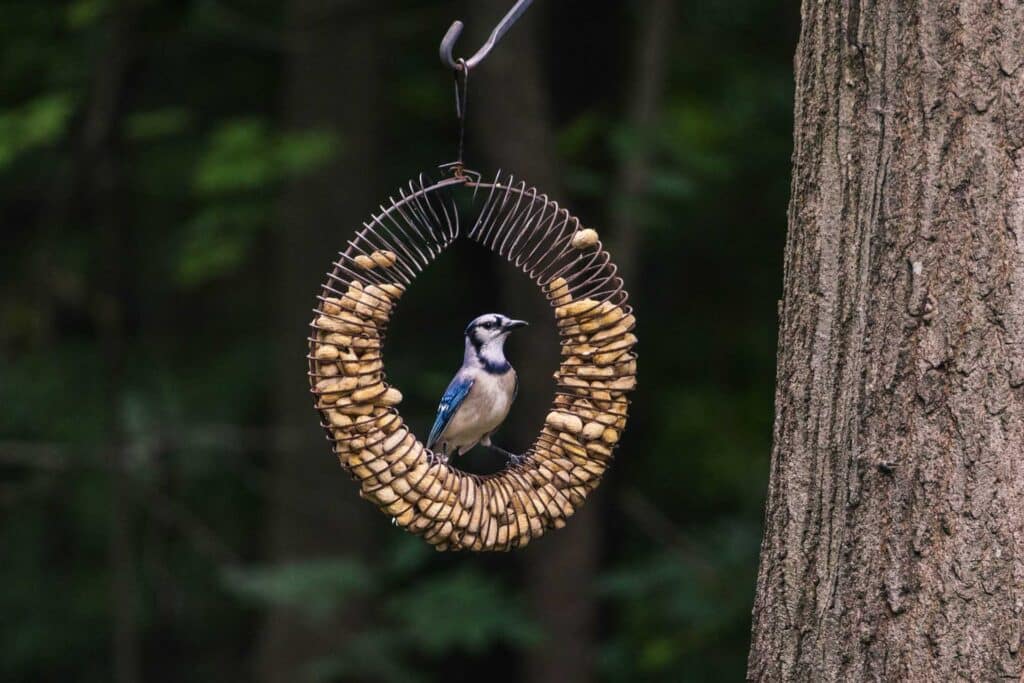
Preferred Feeder: Peanut Ring feeder

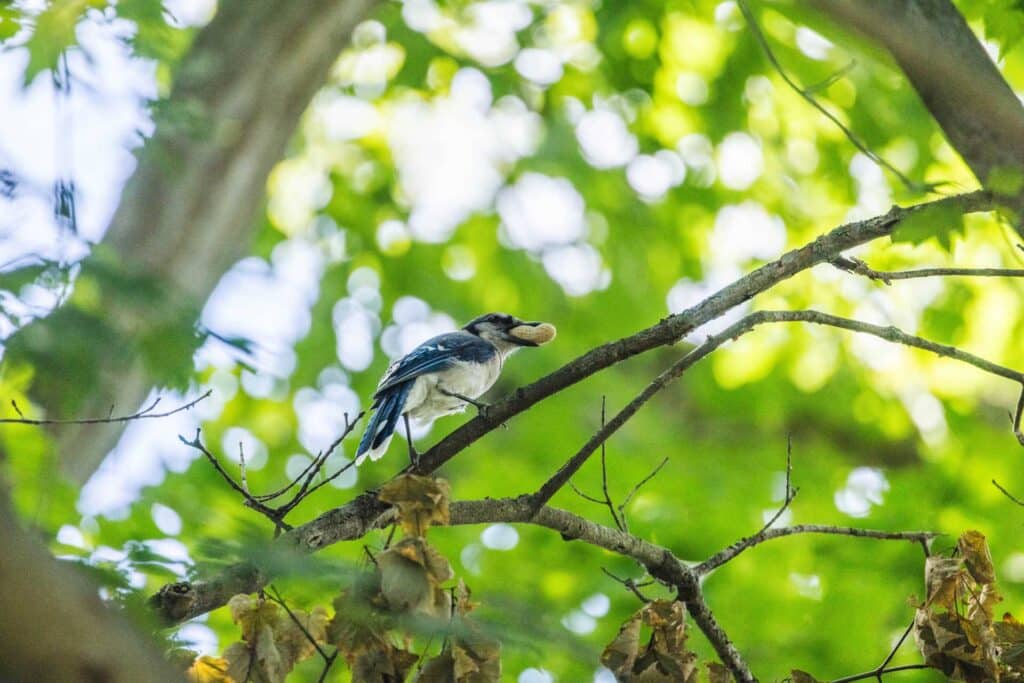
Blue Jays are especially fond of peanuts, which they’ll snatch up with impressive precision—and often cache for later. Designed to hold peanuts in the shell, wreath-shaped peanut feeders are the perfect stage for their acrobatic antics. While admired for their striking plumage and intelligent, tight-knit social behavior, it’s their peanut obsession that truly makes them a delight to watch.
surprising benefits
for gardeners
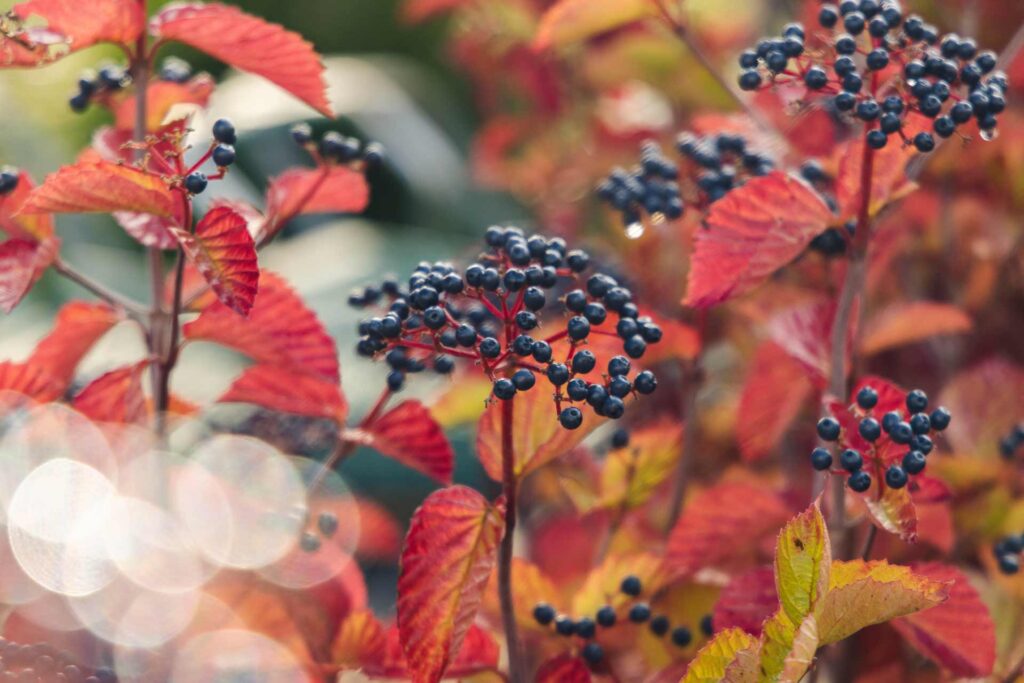
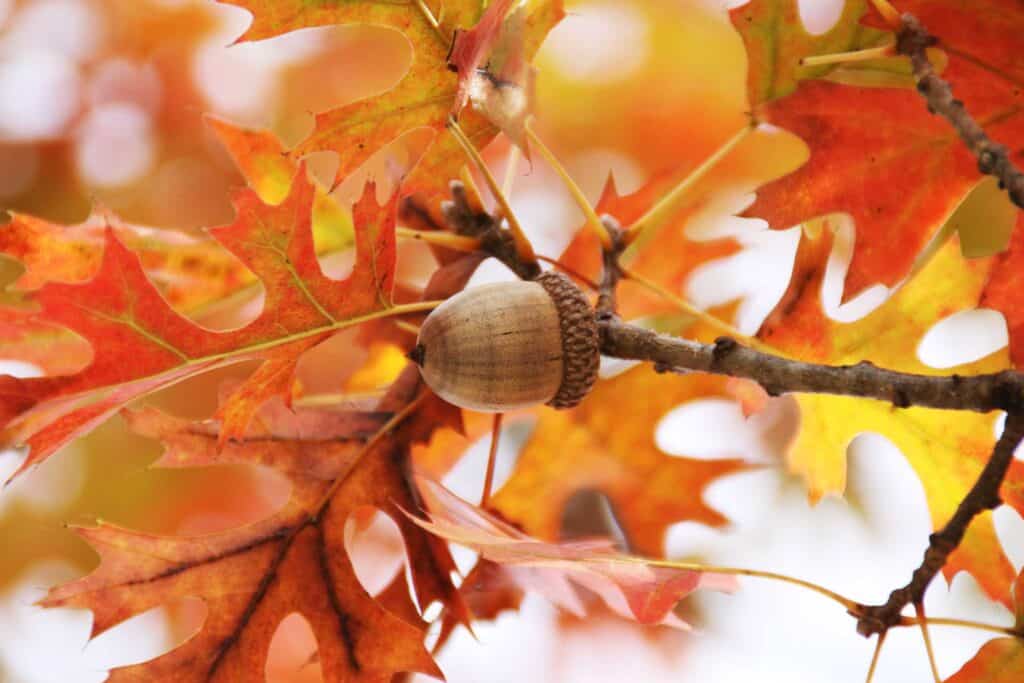
Beyond their feeder antics, blue jays actually contribute in ways that many gardeners appreciate. Studies show they primarily feed on insects and a mix of acorns, nuts, fruits, and grains.
This diet makes them valuable garden allies. Blue jays feast on caterpillars, beetles, and grasshoppers—natural pest control that reduces the need for pesticides. They’re also expert acorn hoarders, often forgetting where they’ve buried seeds. This absentmindedness leads to new tree growth, helping to shape forests and backyard landscapes alike. If you’ve ever watched a blue jay tuck a peanut under a leaf, you’ve witnessed this caching behavior firsthand!
friend or foe
you decide!
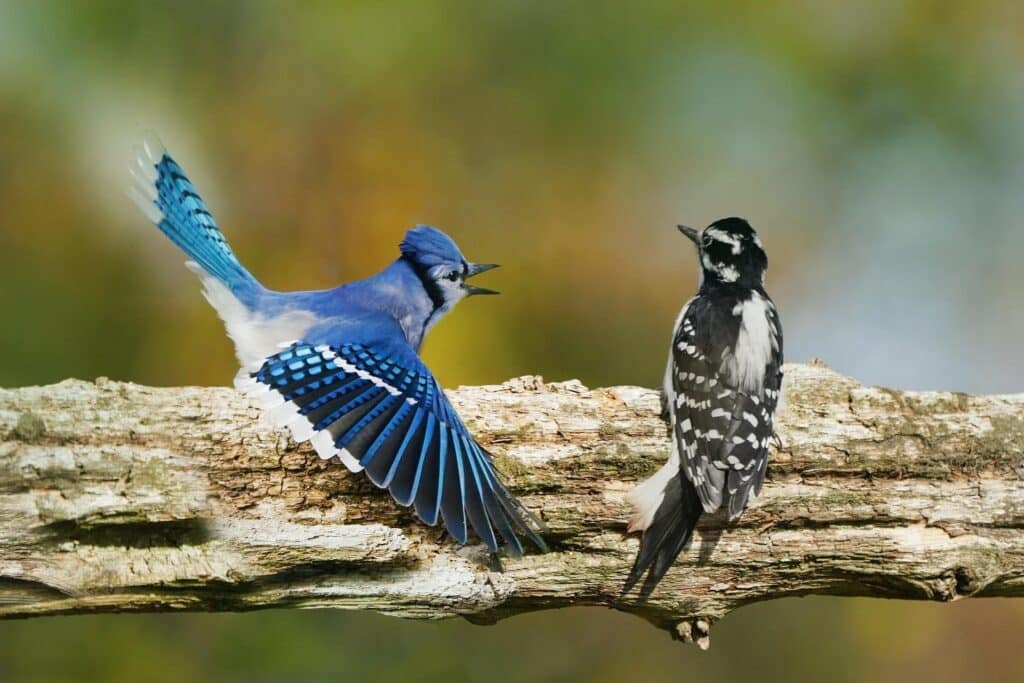
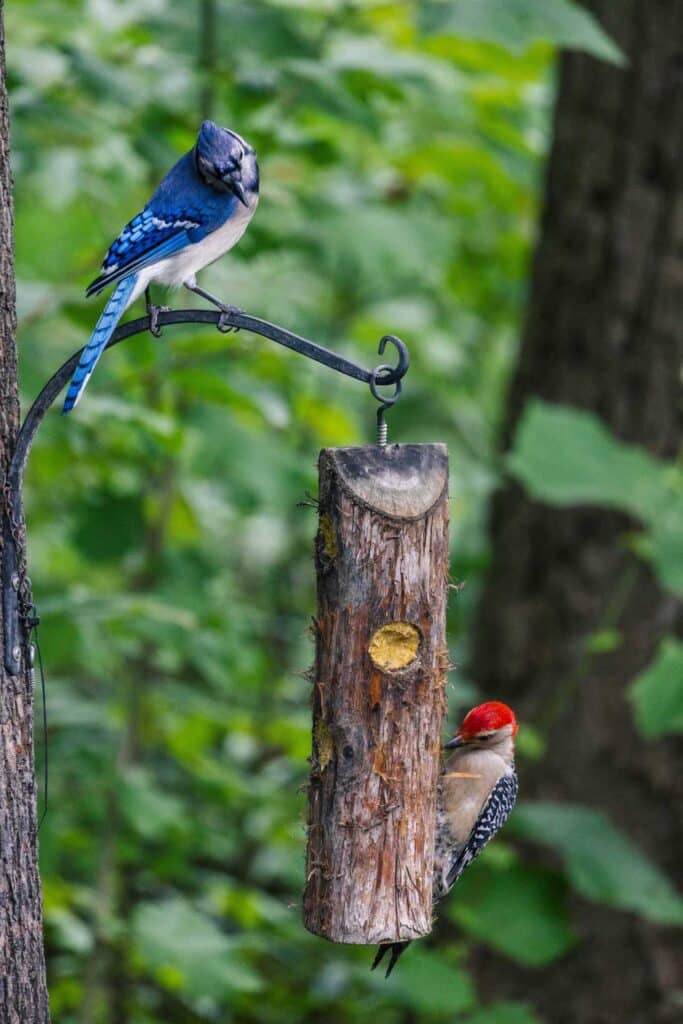
So, are blue jays a gardener’s bestie or bully? It depends on your perspective. If you prefer a quiet backyard filled with small songbirds, their bold behavior might frustrate you. But if you value natural pest control, tree planting, and an early warning system for predators, blue jays might just be your garden’s greatest ally. Love them or not, one thing’s for certain—the backyard is never boring with a blue jay around!