
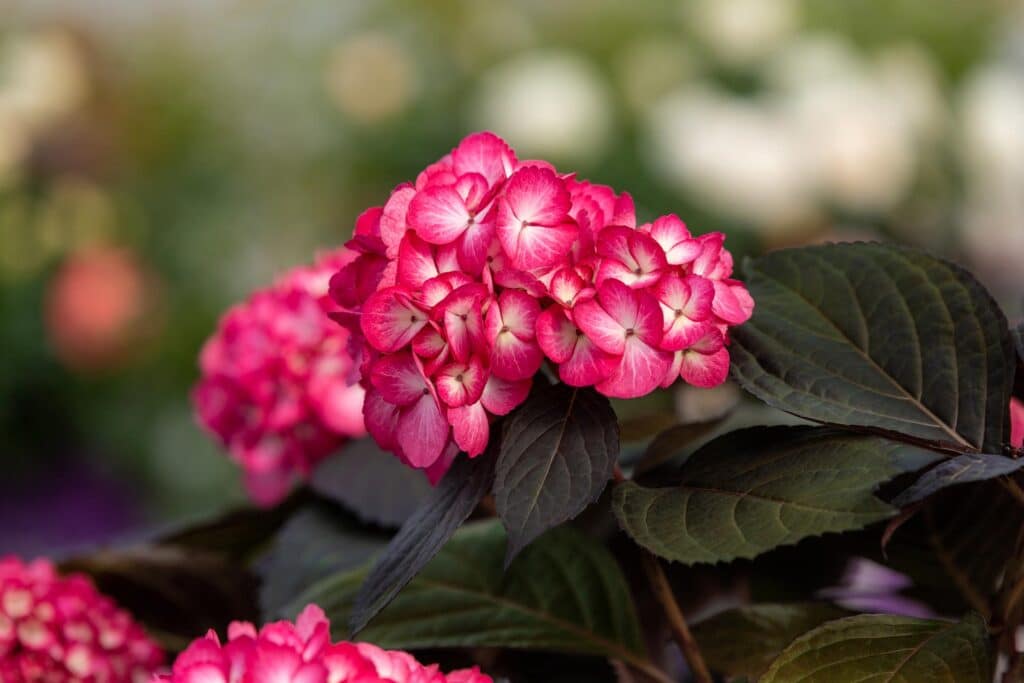
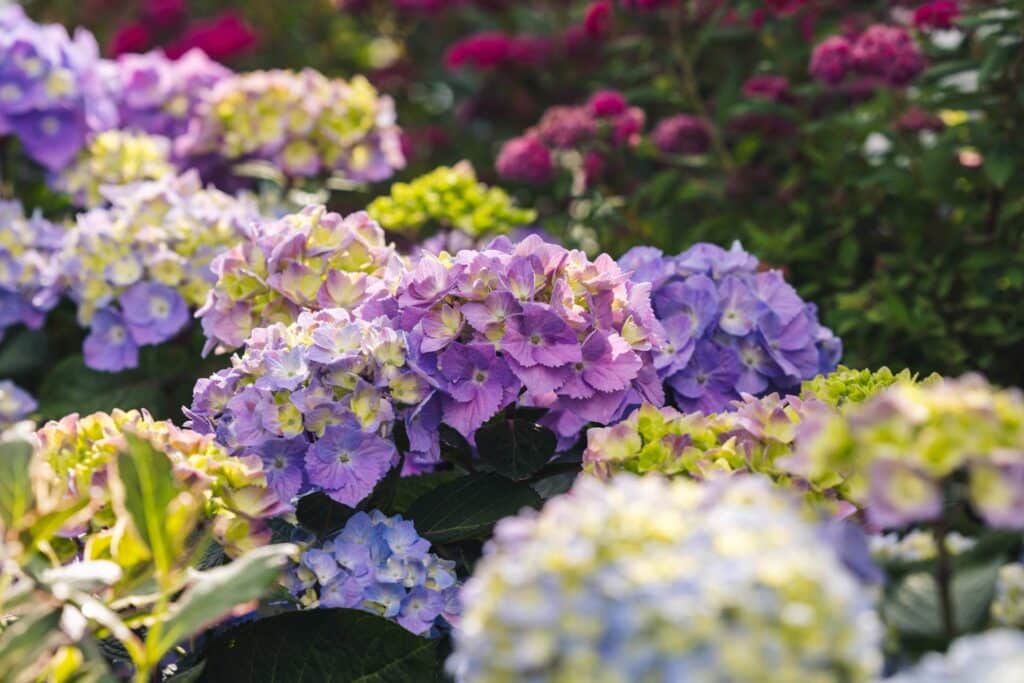
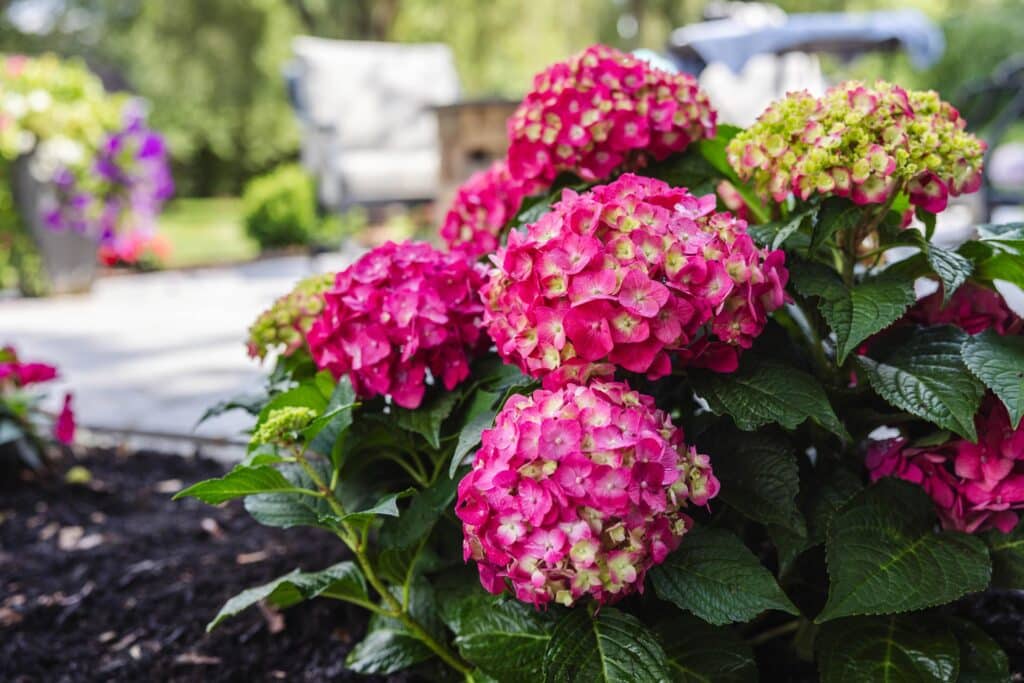
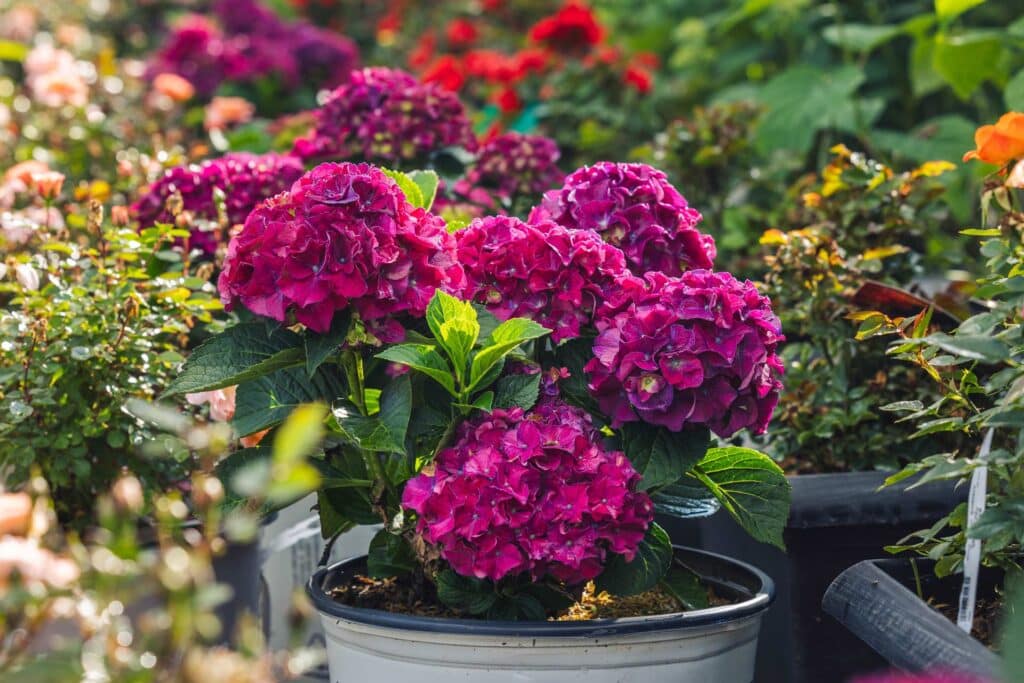
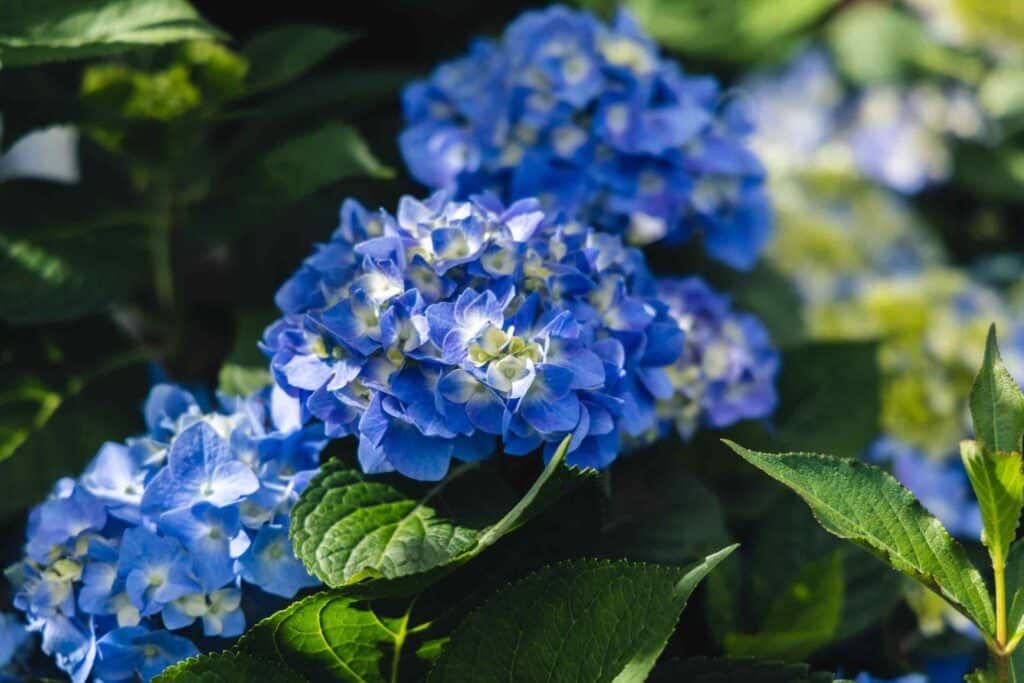
Few flowering shrubs make a bigger impact in the landscape than hydrangeas. With so many types to choose from, why grow Hydrangea macrophylla? Also known as Bigleaf or Mophead hydrangeas, these gorgeous shrubs are celebrated for their bold, glossy foliage and large mophead or lacecap blooms that shift in color from blue to pink—and sometimes purple.
Northeast Ohio's Favorite Flowering Shrub
Macrophylla Hydrangeas
care tips
light & watering
Light | Part Shade (4-6 hours of direct sunlight per day). Morning sun and afternoon shade is ideal!
Watering | Plant in an area with well-draining soil and provide 1-inch of water per week with a deep, thorough watering. If they begin to wilt, provide additional water—but not too much! They like moist soil, but they don’t like to sit in water. When watering, be sure to apply at the base of the shrub to keep foliage clean and reduce the risk of disease issues.
Add mulch around the base of the plant to help retain moisture and keep roots cool.
fertilizing
pink vs. blue
Hydrangeas need a good amount of nutrition to produce dense blooms. We recommend fertilizing twice per year, once in early spring around the same time you prune, and once mid-summer. One thing to note when trying to change the color of hydrangeas—vibrant colors will always stay vibrant and pastel colors will always stay pastel. For example, a vibrant, saturated pink hydrangea won’t turn to a pastel blue and vice versa.
Blue Hydrangeas | Fertilize with Holly-tone™ and Iron-tone™ to keep soil acidic.
Pink Hydrangeas | Fertilize with Plant-tone™ and Iron-tone™ to keep soil neutral or basic.
If you’re experiencing problems with little to no blooms present throughout the season, try using triple phosphate, per package instructions, to encourage blooming.
pruning tips
through the season
Most mophead type hydrangeas bloom on old wood—meaning they set their buds on stems that are at least 1 year old. Pruning at the proper time is key in keeping these beauties blooming year after year.
Early Spring | Lightly prune when new growth starts to emerge in early spring. Wait until you see small green buds start to emerge from the stems (typically mid-to-late March). Prune down to the uppermost growth on each stem. If buds persist all the way through the stem, no pruning is needed. Stems that have a silvery color to them and no new foliage growth can be removed. Dead, diseased, and damaged areas can also be removed at this time.
Mid-Summer | Macrophylla hydrangeas will continue to produce new buds and blooms through summer, especially when deadheaded. To remove spent flowers, follow the bloom down 1-2 leaf nodes and make the cut just above the next large leaf set or new bud growth.
If the plant is getting too large for its space, prune to reduce size (up to 50%) in July—it’s the only time of year to prune them heavily without affecting buds and blooms for the next season.
Fall | Only prune to remove dead, diseased, or damaged areas at this time. After August 1, Macrophylla hydrangeas are developing buds that will set next year’s flowers; so, pruning hard at this time removes flower buds that would otherwise develop on healthy old wood).
winter protection
what to know
Because macrophylla hydrangeas set blooms on their stems in late summer for the following growing season, it’s important to keep them protected from deep freezes during our Northeast Ohio winters.
Once foliage drops in late fall, clean up around the base of the plant. Apply an anti-desiccant spray and wrap the stems with burlap to protect their buds and blooms for the next season. Finish by applying a thick layer of mulch around the base of the plant. Remove burlap in early spring when new growth starts to appear.
It’s a good idea to keep the burlap handy once removed in case late season frosts and freezes occur.


a video guide to
macrophylla hydrangeas
Macrophylla Hydrangeas (a.k.a. Bigleaf or Mophead) are one of the most popular flowering shrubs found in Northeast Ohio! Their large, gorgeous, pink or blue blooms truly shine in the landscape every summer. Noelle details everything you need to know about successfully growing Macrophylla Hydrangeas, including proper pruning and winter protection.—plus she shares some of our favorite varieties. Whether you prefer pink or blue, their bold, beautiful blooms make a sizable impact in partly shaded to sunny spaces in the landscape.
macrophylla hydrangea
frequently asked questions
Q: Why won’t my mophead hydrangea bloom?
A: There are a few different reasons why a macrophylla hydrangea won’t bloom, including pruning, sunlight, and physical damage. Troubleshoot using our hydrangea bloom guide.
Q: How to I protect my hydrangea through the winter in Northeast Ohio?
A: After the foliage drops in late fall clean up leaf litter, mulch around the base of the plant, and wrap the stems in burlap to protect from damaging winter temperatures. Read our full winter protection guide for more detailed information.
Q: Where should I plant my macrophylla hydrangea?
A: These hydrangeas grow best in part shade. Spaces that get morning sun and afternoon shade are ideal! Plant them in an area that has moist, but well-draining soil so they don’t sit in soggy soil.
growing hydrangeas
marvelous mopheads
Growing macrophylla or mophead type hydrangeas in Northeast Ohio may require a little extra maintenance, but they’re absolutely worth the effort! With the right know-how and a few seasonal steps, they’ll reward you with big, beautiful, show-stopping blooms in no time!
Complete Guide to Hydrangea Gardening